My grandfather is a chemistry professor, and it was he who sparked my early interest in chemistry. From a young age, he would often take me to his laboratory, where I was surrounded by fascinating chemicals, rocks, and various scientific equipment. I could even recite the entire periodic table of elements, much to his delight.
I grew up in Beijing, a city where the winters bring snow, though it often melts quickly, leaving behind damp, rain-like streets. One winter day, during a break from school, I was walking along the campus path when something caught my eye—a small, pale, gem-like object lying on the ground. It looked like a piece of quartz, so I quickly picked it up and, feeling its hardness, wrapped it in paper and hurried to show my maternal uncle (舅姥爷).
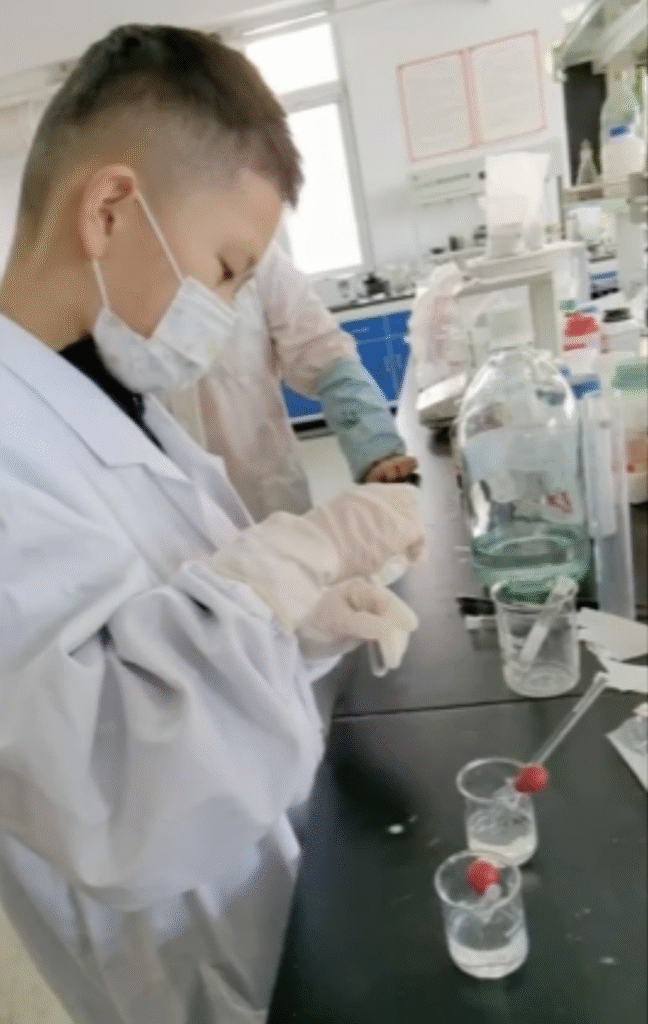
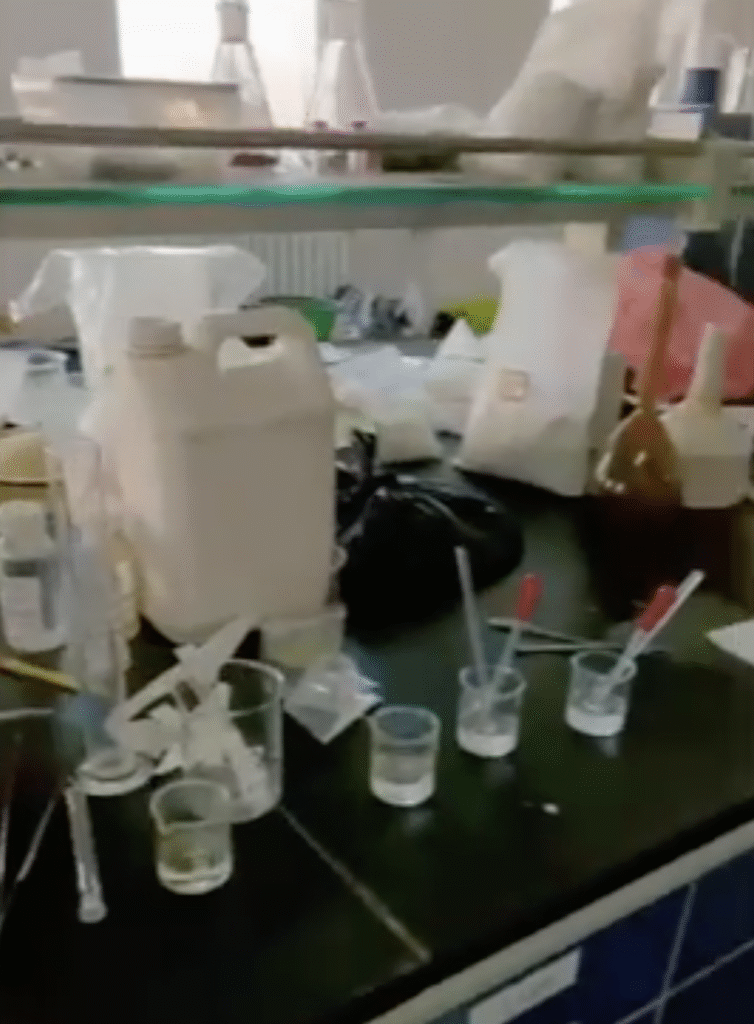
Upon seeing the object, my uncle immediately suspected it was not a stone but rather industrial salt, commonly used in winter for de-icing roads. We took it to his laboratory for further analysis. He prepared a set of standard tests to identify its composition.
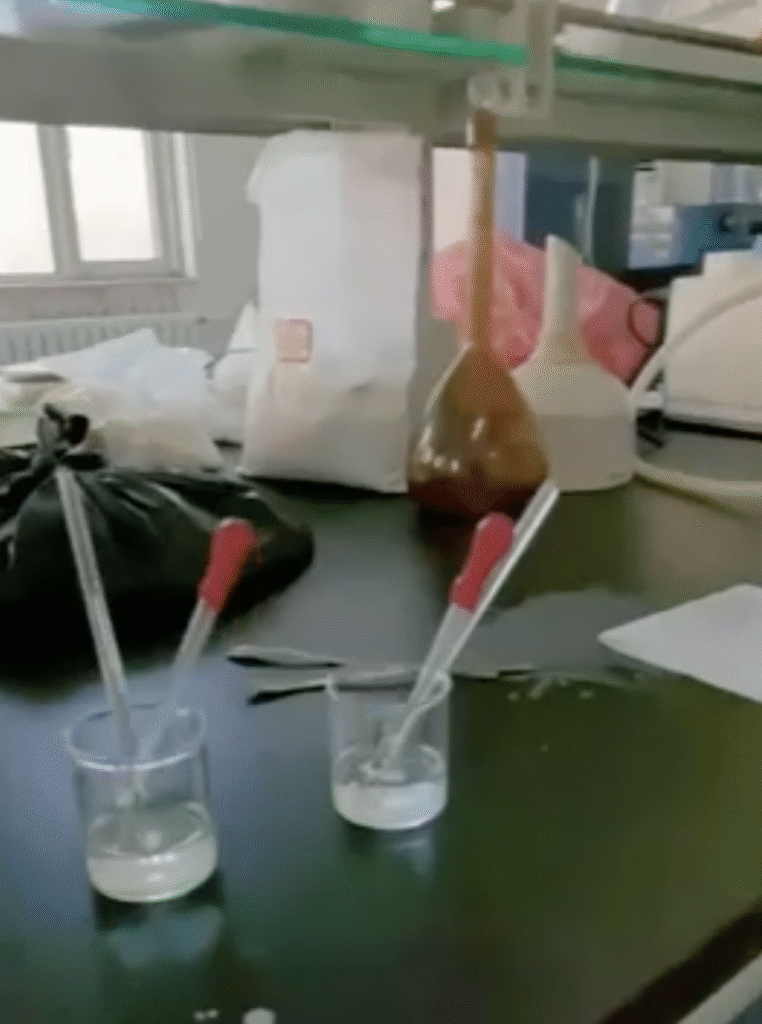
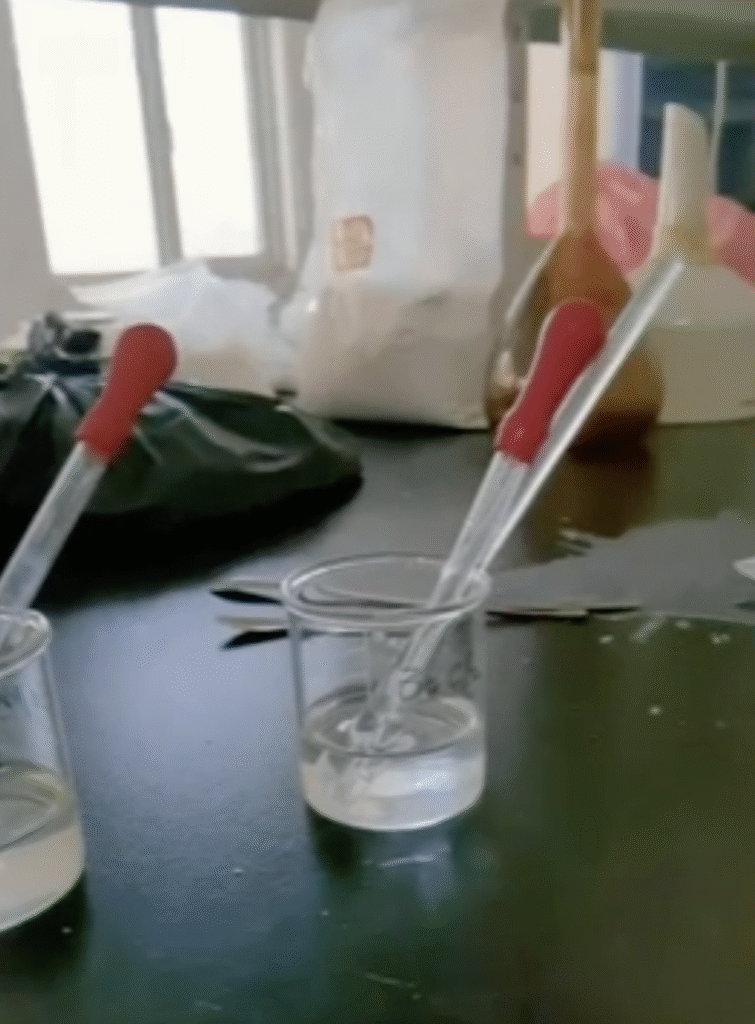
First, we used a dilute aqueous solution of silver nitrate (AgNO₃). When a few drops of the solution were added to a sample of the substance, a white precipitate formed, indicating the presence of chloride ions (Cl⁻). This reaction is characteristic of calcium chloride (CaCl₂), which contains chloride.
Next, we confirmed the presence of calcium ions (Ca²⁺) by performing a simple flame test. When we introduced a small amount of the salt to a Bunsen burner, it produced a brick-red flame, a classic indication of calcium.
Finally, we performed a solubility test. Industrial salt like calcium chloride is highly soluble in water, so when a small amount was dissolved in water, it formed a clear solution, which further confirmed its identity.
After these tests, we concluded that the substance was indeed calcium chloride (CaCl₂), a widely used compound in winter for snow and ice removal due to its hygroscopic properties, allowing it to absorb moisture from the surroundings and lower the freezing point of water.
From that moment on, I understood the role of this salt. Every winter, when snow fell, cleaning workers would quickly clear the paths, thanks to the salt that accelerated the melting of snow and ice. This simple, yet essential chemical is widely used for:
- De-icing and snow removal: On roads, sidewalks, and driveways during winter.
- Dust control: On dirt roads, especially in rural or industrial areas.
- Water treatment: As a flocculant in water purification processes.
- Agriculture: In some fertilizers to improve soil structure.
Looking back, I realize that video was not just a record of an experiment—it marked the beginning of my deeper understanding of chemistry and how science is embedded in our daily experiences. From that moment on, I’ve always seen chemistry as a practical and essential part of the world around us.